Common Mistakes to Avoid During AC Removal in Hyderabad
Removing an old air conditioner may seem straightforward, especially when you are replacing it with a new model or moving to another property. However, improper AC removal can create electrical hazards, refrigerant leaks, equipment damage and unnecessary reinstallation expenses.
Whether you have a window AC or split AC, understanding the common mistakes involved in removal can help you prepare for the process and make better decisions when arranging professional assistance.
This guide explains what homeowners and businesses in Hyderabad should avoid when arranging AC removal.
Why Proper AC Removal Matters
An air conditioner contains electrical components, refrigerant circuits, copper connections and heavy equipment. Its indoor and outdoor units may also be mounted in locations that require careful handling.
Incorrect removal can result in:
- Damage to the indoor or outdoor unit.
- Refrigerant escaping from the cooling system.
- Damaged copper piping and connections.
- Electrical accidents.
- Damage to walls, mounting brackets or surrounding property.
- Problems during future installation.
- Improper disposal of electronic equipment.
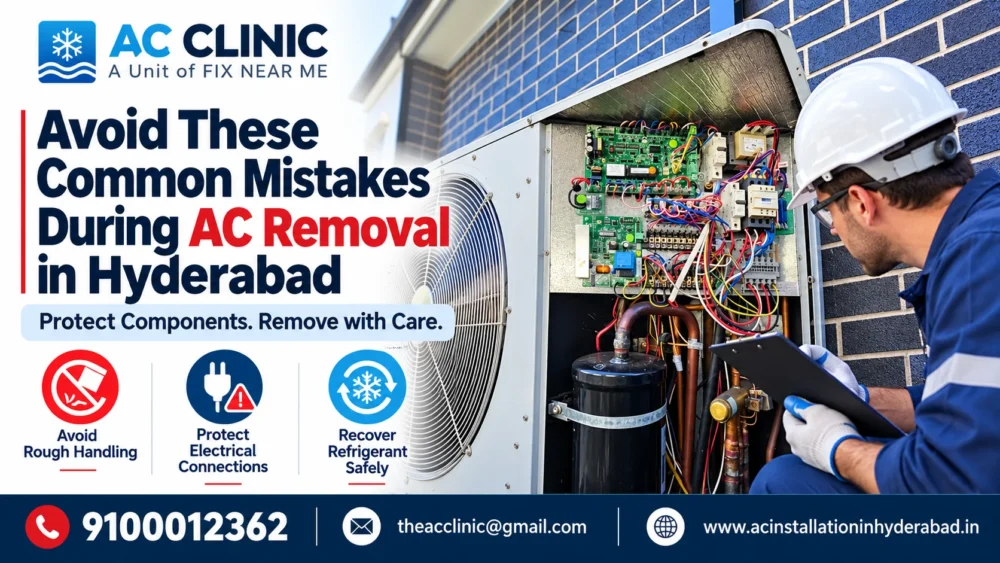
The safest approach is to leave electrical disconnection, refrigerant recovery and equipment dismantling to an appropriately equipped professional.
1. Attempting AC Removal Without Professional Assistance
One common mistake is assuming that an air conditioner can be removed using ordinary household tools.
A split AC has interconnected indoor and outdoor units, electrical connections and a sealed refrigerant circuit. Window AC units can also be heavy and difficult to handle safely.
Attempting removal without suitable knowledge and equipment can expose people to electrical hazards, refrigerant leakage and physical injuries.
What to do instead: Arrange an appropriately qualified professional to assess the installation and carry out the removal.
2. Ignoring Proper Refrigerant Recovery
Air conditioners contain refrigerant within a sealed cooling circuit. Releasing it into the atmosphere during removal is not an appropriate removal method.
Improper refrigerant handling can create environmental concerns and may also result in the loss of refrigerant needed for future use or servicing.
The refrigerant type and the manufacturer’s requirements should be identified before removal.
What to do instead: Ask the service professional how refrigerant recovery will be handled. Do not attempt to release, transfer or recover refrigerant yourself.
3. Overlooking Electrical Safety
Electrical connections must be handled carefully during AC removal.
Switching off an air conditioner using its remote control does not establish that its electrical supply has been safely isolated.
Opening electrical enclosures, disconnecting wiring or handling electrical components without appropriate precautions can cause electric shock or equipment damage.
What to do instead: Do not attempt to disconnect AC wiring yourself. Leave electrical isolation and disconnection to a qualified person using appropriate safety procedures.
4. Damaging Copper Pipes and Refrigerant Connections
Copper pipes connect the indoor and outdoor units of a split air conditioner. Damage to these connections can affect future installation and may make some components unsuitable for reuse.
Common mistakes include careless handling, unnecessary bending and rough removal of connected components.
Whether existing pipes can be reused depends on their condition, compatibility and the requirements of the new installation.
What to do instead: Ask the professional to inspect the piping and explain whether it is suitable for reuse or requires replacement.
5. Ignoring Indoor and Outdoor Unit Accessibility
The indoor and outdoor units may be installed in different conditions.
For example, an outdoor unit may be positioned on an elevated wall, balcony, external bracket or restricted-access area.
Ignoring these installation conditions can increase the risk of equipment falling, property damage or injury.
What to do instead: Inform the service provider about the unit’s location, mounting arrangement and access restrictions before booking.
6. Assuming Every AC Brand and Model Has the Same Removal Requirements
Different air conditioners can have different designs, electrical arrangements and refrigerant specifications.
The removal requirements may depend on the actual model rather than simply the brand name.
What to do instead: Share the model details with the professional and follow the manufacturer’s applicable service documentation.
7. Forgetting to Inspect the Installation Area After Removal
Removing an AC does not necessarily mean that the surrounding area is ready for another installation.
Mounting holes, brackets, drainage arrangements and piping openings may need attention.
Leaving these areas unchecked can create problems during renovation or installation of a replacement unit.
What to do instead: Inspect the area after removal and identify any repair, sealing or installation preparation requirements.
8. Disposing of the Old AC Improperly
An old air conditioner should not simply be treated as ordinary household waste.
Air conditioners contain electrical and electronic components, metals, refrigerant-related components and other materials that require appropriate handling.
India’s E-Waste (Management) Rules, 2022 provide a regulatory framework for specified electrical and electronic equipment and its end-of-life management.
What to do instead: Check appropriate collection, take-back or authorised recycling options before disposing of an old air conditioner.
What Should You Check Before Booking AC Removal?
Before arranging professional removal, prepare the following information:
- AC type: window or split.
- Brand and model, if available.
- Approximate installation location.
- Indoor and outdoor unit accessibility.
- Whether the AC is being relocated or permanently discarded.
- Whether transportation or reinstallation is also required.
- Any known installation or access restrictions.
Confirm the scope of work and quotation before the service begins.
When Should You Avoid Handling an AC Yourself?
Do not attempt removal if the work involves:
- Electrical wiring or electrical enclosures.
- Refrigerant lines or sealed cooling components.
- Heavy outdoor units or elevated installations.
- Difficult mounting arrangements.
- Damaged pipes or suspected refrigerant leakage.
- Restricted access or unsafe working conditions.
Keep people away from unstable equipment and do not attempt to catch or support a falling unit.
Frequently Asked Questions
1. What are the most common mistakes during AC removal?
Common mistakes include attempting DIY dismantling, improper refrigerant handling, unsafe electrical disconnection, damaging copper piping, overlooking unit accessibility and disposing of equipment incorrectly.
2. Can I remove a split AC myself?
Professional removal is recommended because split AC removal involves electrical connections, refrigerant circuits, mounting arrangements and heavy equipment. Do not attempt electrical disconnection or refrigerant handling yourself.
3. Why is refrigerant recovery important during AC removal?
Refrigerant recovery helps prevent unnecessary refrigerant release and allows the refrigerant to be managed appropriately during servicing or equipment disposal.
4. Can copper pipes be reused after AC removal?
Reuse depends on the condition of the pipes, compatibility with the replacement equipment and the manufacturer’s installation requirements. A professional inspection is necessary.
5. Does AC removal differ between window and split AC units?
Yes. Their construction, mounting arrangements, electrical connections and removal requirements differ. The removal approach should suit the actual equipment and installation conditions.
6. What information should I provide before booking AC removal?
Provide the AC type, model details if available, installation location, accessibility, and whether you require removal only or removal followed by relocation or reinstallation.
7. How should an old air conditioner be disposed of?
Use an appropriate collection, take-back or authorised recycling channel. Avoid damaging the equipment or releasing refrigerant during disposal.
Arrange Professional AC Removal in Hyderabad
Planning to relocate, replace or remove an old air conditioner?
Before arranging the work, explain the AC type, installation location and whether you need removal alone or additional installation assistance.
Contact AC Clinic to enquire about available doorstep AC services and confirm service availability for your location.
Phone: 9100012362
Email: theacclinic@gmail.com
Confirm the service scope, availability and quotation before booking.