

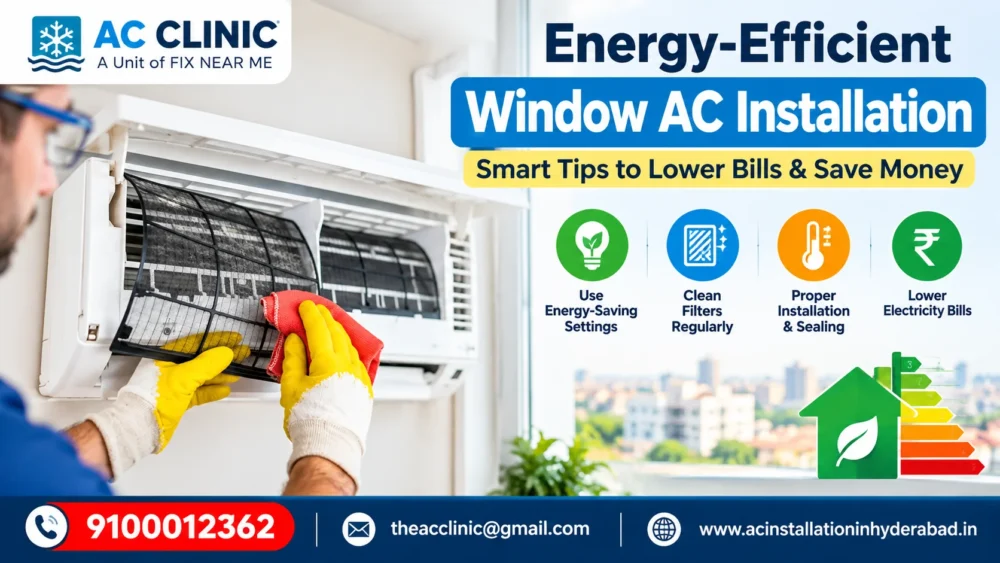
Energy-Efficient Window AC Installation: Smart Ways to Reduce Electricity Consumption
A window air conditioner can provide comfortable cooling without requiring a separate outdoor unit. However, its electricity consumption depends on several factors, including cooling capacity, installation quality, room conditions, operating settings and maintenance.
An incorrectly fitted window AC may allow outside air to enter the room, while restricted airflow or unsuitable equipment sizing can affect cooling performance.
If you are planning a new installation or want to improve the efficiency of an existing window AC, this guide explains the important factors to consider.
1. Choose the Right Window AC Capacity
Selecting an appropriately sized air conditioner is an important part of energy-efficient installation.
An undersized unit may struggle to maintain the desired temperature, particularly during hot weather. An oversized unit may not provide the intended comfort and humidity control under all operating conditions.
Before choosing a window AC, consider:
- Room floor area and ceiling height.
- Number of people regularly occupying the room.
- Direct sunlight entering through windows.
- Heat generated by computers, lighting and other equipment.
- Insulation and ventilation conditions.
- Room layout and window placement.
Do not select an AC capacity using floor area alone. Ask an installation professional to assess the room’s cooling requirements.
2. Compare BEE Star Ratings Before Purchasing
The Bureau of Energy Efficiency (BEE) provides energy-efficiency labels for room air conditioners in India.
Before purchasing a window AC, compare the energy information on the actual model’s label.
Check:
- BEE star rating.
- Annual electricity consumption.
- Rated cooling capacity.
- Power consumption.
- Energy-efficiency information.
- Manufacturing year and label validity.
A higher star rating generally indicates better energy efficiency within the applicable product category and rating period.
Compare similar-capacity models and check their actual energy-label information instead of relying only on advertising claims.
Official reference: Bureau of Energy Efficiency – https://beeindia.gov.in/
3. Select a Suitable Installation Location
The location of a window AC can affect its cooling performance.
Consider these factors when planning installation:
Avoid unnecessary direct heat exposure
Where the building layout permits, avoid placing the unit where it receives excessive direct sunlight.
Maintain adequate outdoor airflow
The external side of the AC must have sufficient clearance for heat discharge. Avoid blocking the condenser airflow with objects, coverings or nearby obstructions.
Consider room air distribution
Position the unit so that cooled air can circulate through the occupied part of the room.
Check structural suitability
The window opening, supporting structure and mounting arrangement must safely accommodate the AC’s weight.
The manufacturer’s installation instructions should determine the final positioning requirements.
4. Seal Gaps Around the Window AC
Air leakage around an improperly fitted window AC can reduce cooling efficiency.
Warm outside air entering the room increases the cooling load, making it harder to maintain a comfortable indoor temperature.
Important installation considerations include:
- Properly fitted side panels.
- Suitable weather-stripping.
- Sealing gaps around the window opening.
- Secure positioning of the window sash.
- Insulation compatible with the manufacturer’s instructions.
Inspect the surrounding window area for visible gaps. Have unsuitable or damaged sealing materials replaced.
Do not block the AC’s ventilation openings while sealing the installation.
5. Ensure Proper Mounting and Drainage
A window AC must be securely supported.
Incorrect mounting can create stability concerns and may affect the unit’s drainage arrangement.
Professional installation should consider:
- The strength of the supporting structure.
- Correct mounting and fastening.
- Manufacturer-specified installation orientation.
- Proper condensate drainage.
- Protection against unwanted water entry.
- Adequate clearance for servicing.
Do not assume that every window AC requires the same mounting angle. Follow the instructions for the particular model.
6. Keep Airflow Unobstructed
Air circulation is essential for effective cooling.
Avoid placing furniture, curtains or other objects directly in front of the indoor air outlet.
Also ensure that the external air intake and heat-discharge areas are not obstructed.
Poor airflow can affect cooling performance and may cause the AC to operate under unnecessary strain.
7. Maintain the Window AC Regularly
Dust accumulation and neglected maintenance can affect airflow and cooling performance.
Follow the manufacturer’s cleaning and maintenance recommendations.
Some useful practices include:
- Inspecting and cleaning accessible filters as instructed.
- Keeping the air inlet and outlet unobstructed.
- Checking for visible damage to external panels.
- Observing unusual noise or vibration.
- Arranging professional inspection when cooling performance changes.
- Checking drainage for visible leakage or blockage.
Switch off and isolate the appliance according to its instructions before performing permitted external cleaning.
Do not open electrical compartments or attempt to clean internal electrical components yourself.
8. Use Sensible Temperature Settings
Very low temperature settings do not automatically make an air conditioner cool a room more efficiently.
Choose a comfortable setting appropriate for the occupants and indoor conditions.
Additional energy-conscious habits include:
- Keeping doors and windows closed while cooling.
- Using curtains or blinds to reduce direct sunlight.
- Switching off cooling when it is no longer needed.
- Using a ceiling or table fan to distribute cool air.
- Avoiding unnecessary changes to thermostat settings.
These measures can help reduce avoidable cooling demand.
9. Avoid Common Window AC Installation Mistakes
Some installation problems can affect efficiency, comfort and equipment safety.
Installation mistake | Possible consequence |
Incorrect AC capacity | Unsatisfactory cooling performance |
Gaps around the window | Warm air infiltration |
Unstable mounting | Safety and vibration concerns |
Blocked airflow | Reduced heat exchange |
Incorrect drainage arrangement | Water leakage |
Poor electrical installation | Electrical safety risks |
Ignoring manufacturer instructions | Improper equipment operation |
Installation, electrical connections and structural mounting should be handled by appropriately qualified professionals.
10. Does Professional Window AC Installation Help Reduce Electricity Bills?
Professional installation can help avoid problems associated with incorrect mounting, inadequate sealing, unsuitable positioning and improper drainage.
However, installation alone cannot guarantee a lower electricity bill.
Actual consumption also depends on:
- AC capacity and energy rating.
- Daily operating hours.
- Outdoor temperature.
- Room insulation.
- Occupancy and heat load.
- Temperature settings.
- Equipment condition and maintenance.
For this reason, energy-efficient cooling requires a combination of suitable equipment, correct installation and sensible operation.
Frequently Asked Questions
1. How can I make my window AC more energy-efficient?
Choose an appropriately sized unit, seal installation gaps, maintain unobstructed airflow, clean accessible filters according to the manufacturer’s instructions and use comfortable temperature settings.
2. Does incorrect window AC installation increase electricity consumption?
It can. Air leakage, unsuitable positioning and restricted airflow may increase the cooling demand and affect equipment performance.
3. What BEE star rating should I choose for a window AC?
Compare available models using their applicable BEE labels. A higher star rating generally indicates better efficiency within the relevant category and rating period. Also compare annual electricity consumption and cooling capacity.
4. Should a window AC be installed at an angle?
Follow the manufacturer’s installation instructions. The correct orientation depends on the particular model and its drainage design.
5. Can gaps around a window AC affect cooling?
Yes. Gaps can allow outside air to enter the room, increasing the cooling load. Appropriate weather-stripping and insulation help address this issue.
6. How often should I clean a window AC filter?
Follow the manufacturer’s recommended cleaning interval. Filter inspection and cleaning may be needed more frequently in dusty environments or during periods of heavy use.
7. Can a fan help reduce window AC electricity consumption?
A ceiling or table fan can improve air circulation and help occupants remain comfortable at a less demanding AC temperature setting.
8. When should I arrange professional window AC inspection?
Arrange an inspection if you notice unusual noises, persistent water leakage, poor cooling, damaged mounting or electrical problems. Avoid opening electrical components or attempting hazardous repairs.
Conclusion
Energy-efficient window AC installation involves more than simply fitting an air conditioner into a window opening. Appropriate capacity, secure mounting, correct sealing, adequate airflow and proper drainage all contribute to effective operation.
Combine these installation considerations with regular maintenance and sensible operating habits to manage cooling requirements and electricity consumption.
If your window AC requires installation or professional attention, check the availability of an appropriate service before booking.